
Pedodontist vs. Pediatric Dentist: What's the Difference?
Introduction
If you've come across the word "pedodontist" while searching for dental care for your child, you're not alone - and you might be wondering whether it's something different from a "pediatric dentist," or just another name for the same thing. As a pediatric dentist in Christiansburg, we get this question often enough that it's worth a clear, straightforward answer.
Pedodontist vs. Pediatric Dentist: The Short Answer
They're the same profession. "Pedodontist" is the older term, drawn from the Greek words for "child" and "tooth doctor," and it was the standard title for decades. "Pediatric dentist" is the modern term the American Academy of Pediatric Dentistry (AAPD) and dental schools use today. If you see one term on one website and the other term somewhere else, both are referring to a dentist with the same specialized training in treating infants, children, and teenagers.
Why the Terminology Changed
Dentistry, like medicine generally, has shifted its language over time to align with how other specialties are named - "pediatrician" for children's physicians, "pediatric dentist" for children's dentists. The word "pedodontist" hasn't disappeared; it still shows up in older textbooks, some insurance paperwork, and search engines, which is exactly why so many parents end up searching for it. But if you ask a dental school today what they call this specialty, "pediatric dentistry" is what you'll hear.
What Extra Training Does a Pedodontist/Pediatric Dentist Have?
Both terms describe a dentist who has completed dental school and then gone on to an additional two to three years of specialized residency training focused entirely on children - from infancy through the teenage years, including children with special healthcare needs. That training covers child psychology and behavior guidance, growth and development of the teeth and jaws, treating dental trauma in young patients, and - when appropriate - safe sedation techniques for children who can't yet tolerate treatment while fully awake. A general dentist who treats "kids too" has not necessarily completed this residency.
How This Differs From a General or Family Dentist
A general or family dentist can absolutely see children, and many families are happy with that arrangement, especially once kids are a little older and cooperative in the chair. The difference shows up most with very young children, kids who are anxious or have had a difficult dental experience, children with sensory sensitivities or developmental differences, and situations involving injury or urgent care. A pediatric dentist's office - the equipment, the pacing of an appointment, the way procedures are explained - is built specifically around what actually works for a child's attention span and comfort level, not adapted from an adult practice.
Signs It's Time to See a Pediatric Dentist Specifically
Most pediatric dentists recommend a first dental visit by your child's first birthday or within six months of the first tooth appearing - earlier than many parents expect. Beyond that first visit, a pediatric dentist is worth prioritizing if your child has significant dental anxiety, a diagnosis like autism or ADHD that affects how they handle new environments, a history of early childhood cavities, or if you simply want a dental home that will grow with your child from toddlerhood through the teenage years without needing to switch providers.
What to Expect at a Pediatric Dental Visit
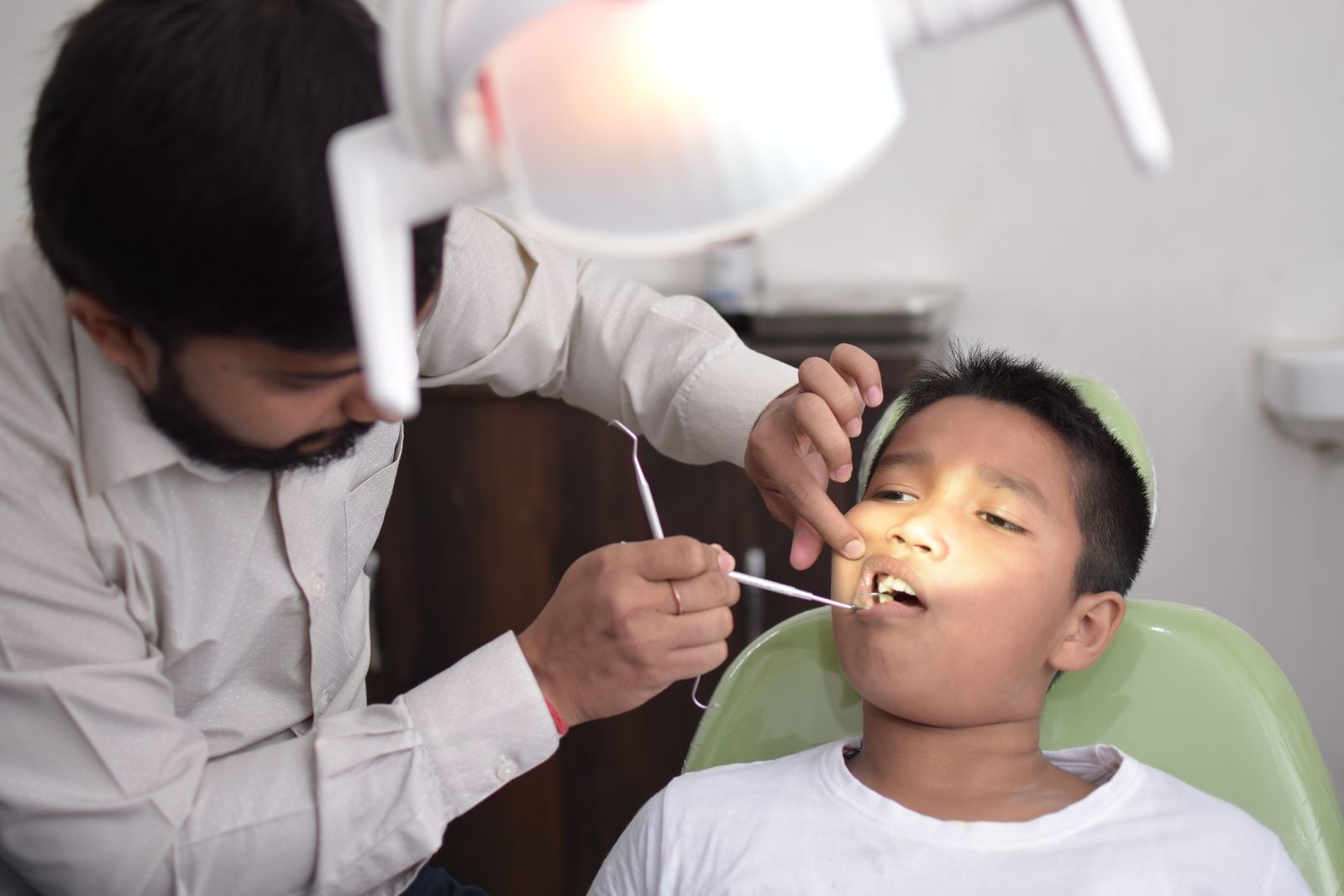
A typical first visit is shorter and gentler than most parents expect - often just a "ride" in the chair, a gentle look at the teeth and gums, and a conversation with you about feeding, teething, and home care. As children get older, visits add cleanings, fluoride, and preventive treatments like dental sealants once the back molars come in. The goal at every stage is to keep visits calm and positive so your child builds a comfortable relationship with dental care early, rather than only associating the dentist with problems.
How to Verify a Provider's Pediatric Credentials
If you want to confirm whether a dentist has completed pediatric-specific residency training, you can ask directly at the time of booking, look for board certification through the American Board of Pediatric Dentistry, or check whether the practice is a member of the AAPD. Most pediatric dental offices will state this training clearly on their website and are happy to answer questions about it - it's a reasonable thing to ask before your child's first appointment anywhere.
Finding a Pedodontist Near You in Christiansburg
Whichever term you searched to find us, our team at Opulent Pediatric Dentistry has the residency training, equipment, and day-to-day experience to make dental visits genuinely comfortable for children of every age, from first tooth through the teenage years. We welcome families from Christiansburg, Blacksburg, Radford, Dublin, Pulaski, and Roanoke looking for a dental home built specifically around kids.
Conclusion
"Pedodontist" and "pediatric dentist" are two names for the exact same specialty - there's no difference in training, scope, or the care your child receives. What matters more than which word you search is making sure the provider you choose has genuine pediatric-specific training and an office built around what actually works for children. If you're ready to find that for your family, we'd be glad to help.
FAQ
Is a pedodontist the same as a pediatric dentist?
Yes. "Pedodontist" is the older term for the same specialty now commonly called "pediatric dentist." Both require the same additional residency training beyond dental school.
Do I need a pedodontist, or can my family dentist see my child?
A family dentist can treat many children well, especially as they get older. A pediatric dentist's extra training becomes most valuable for very young children, anxious children, kids with special healthcare needs, or dental emergencies.
At what age should my child first see a pediatric dentist?
The American Academy of Pediatric Dentistry recommends a first visit by age one, or within six months of the first tooth erupting.
How do I know if a dentist is actually trained in pediatric dentistry?
Ask about their residency training, look for board certification through the American Board of Pediatric Dentistry, or check for AAPD membership - reputable pediatric practices list this clearly.

Medically Reviewed By
Pediatric dentist with more than 35 years of clinical experience. Trained in pediatric dentistry at Children's National Medical Center, Washington, D.C., and fluent in English and Spanish.